

If you go back far enough, the story of biodiversity is also the story of astronomy. In the early universe only the light elements such as hydrogen and helium existed. Through immense heat and pressure, the heavier elements that make up organic life – namely carbon, oxygen, calcium, iron and many others – were forged deep within ancient stars; enriched minerals and elements that scattered across the cosmos when some of these stars exploded in spectacular supernovae. Over billions of years this stellar material became part of new stars, planets, rocks and oceans – establishing geology. Geology became soil. Simple organic compounds gradually increased in complexity through chemical reactions, eventually forming the first self-replicating cells – a process known as abiogenesis. Soil became plants. Plants became ecosystems. And then: ecosystems bore fauna and people. The calcium in your bones, the iron in your blood, the oxygen you breathe and the carbon that forms every cell in your body were created inside stars long before the earth existed. We are all made of stardust – one moment in a chain that began in stellar fire billions of years ago and, in a sense, we are the universe looking back on itself.
Humans enter the ecological story within the last few milliseconds of geological time, and hot out of the gates we’re off altering our blue orb with industrial vigor; extracting and burning until the profundity of our galactic origins collapsed into absurdity right around 2015, when a Republican Senator from Oklahoma brought a snowball onto the United States Capitol. Fresh out from a wintry Washington D.C., the icy projectile on the Senate floor was meant to challenge reports of a warming globe and dispute the overwhelming scientific consensus. Referring to climate change as “the greatest hoax ever perpetrated on the American people” is a brand that’s scarred and hobbled Congress ever since. This now- infamous misconstruance was a failure to understand the difference between weather and climate – and a caveat that the truth of nature should never correlate with one’s political views.
While not everybody is a scientist – certainly not in Congress – you don’t need to be the brightest spark to clarify the issue: climate is not weather. Weather is an event. Climate is a relationship. Weather tells you what to wear today. Climate tells you what clothes belong in your closet. Weather bends the grass. Climate shapes the biome. A single hot weather day may stress a plant. A changing climate rewrites which plants can belong. Biodiversity thrives or declines not around isolated events; but around patterns, rhythms, intervals, seasonality and recurrence. Fynbos – for example – evolved not around a single fire, but around millennia of fire regimes.

The consequences of climate change are no longer arguable. Novel terms such as “Godzilla-strength super El Niño” make for startling headlines, and amplified search trends, but with the most severe heatwave ever boiling over Europe causing deaths, disruptions and emergency warnings; references to this extreme climate event are not merely alarmist hysteria – and certainly not a Left-wing hoax. If you have yet to experience this intense swelter – fill up your ice trays, buy some mojito mix and humbly recall the difference between weather and climate. The city of Paris even banned public alcohol consumption to reduce heat-related health risks as France just experienced a record-breaking heatwave. Hot days are coming to a hemisphere near you soon. Perhaps the “snowbird” tourists of the Global North who typically evade their winter by flocking south may yet become “sunbirds” – exchanging the present intolerable heat of summer for milder winters. The currently-unfolding super El Niño could be the most potent observed in over a century, according to forecasts. The mercury spiking up doesn’t just translate to human discomfort (and revised travel agendas): a Super El Niño is an exceptionally strong warming of the tropical Pacific ocean that disrupts weather patterns across the world. Its effects include record global temperatures, severe droughts in some regions and flooding in others (remember weather and climate?), significantly increased wildfire risks with reduced burning intervals, and heightened pressures on water supplies, agriculture and infrastructures.
In South Africa these events are linked to sustained hotter conditions, reduced summer rainfall, water scarcity and lower crop yields which can threaten food security. Staples such as maize are expected to be the most vulnerable. Grazing land becomes barren. Pollinators get heat-stressed, threatening their interactions. Biodiversity suffers through phenological mismatches between species, when seasonal timings between life cycle events – such as flowering, breeding and migration – are pushed out of synchronicity, reducing some species numbers, which then reproduce less. Fisheries also deteriorate because marine ecosystems are disrupted through warmer seas, altered nutrient cycles and coral bleaching. This leads to higher food prices and an increased dependence on imports. Human health is impacted largely by heat-related illness, heatstroke, smoke-inhalation, exacerbated chronic conditions including cardiovascular disease and diabetes, changes in infectious disease transmission patterns, reduced water quality after droughts or floods, and drownings as more people go swimming to cool off. Heatwaves are inevitably deadly, even in developed nations. A warming world amplifies environmental, social, healthcare and economic pressures across ecosystems and communities. El Niño, it should still be said, is a natural climate oscillation that ecosystems evolved with and is not inherently bad. However, along with warmer baselines from climate change it intensifies temperature extremes, and the world is currently on track for 2.6 – 3.1 degrees Celsius of warming over the course of this century. This shoots well past the best case scenario set by the Paris climate agreement of limiting warming to 1.5 degrees Celsius, while mildly avoiding the worst predictions. El Niño is fuel to the fire, turning up the thermostat significantly beyond these averages.
Africa is disproportionately affected because many African countries experience severe impacts despite contributing relatively little to global greenhouse gas emissions – often having fewer resources and services to help absorb climate shocks. El Niño can disrupt rainfall patterns across the continent, leading to drought in parts of southern and eastern Africa and flooding in some equatorial regions. These shifts affect agriculture, water availability, food security, biodiversity, energy production, and livelihoods – especially where communities depend heavily on rain-fed farming. In Southern Africa the most recent El Niño cycle brought the region’s worst drought in more than a century, leaving 61 million people in need of assistance, straining livestock, water systems and pasturelands, and pushing more than 8 million people into food insecurity. A forecast by the United Nations Food and Agriculture Organization points to an over 50 percent probability of agricultural drought across large parts of Namibia and Botswana, extending into Angola, Zambia, Zimbabwe, South Africa and parts of Mozambique and Madagascar. In a region where livestock underpins both food security and household wealth, African farmers face a tumultuous future that could explode into a regional crisis. South Africa is likely to face significant weather-related agricultural risks. While strong harvests could keep food prices relatively contained for most of 2026, prolonged El Niño events have historically caused multi-year droughts, pushing food inflation into high double digits. Soft commodities grown in tropical regions – such as cocoa, coffee and sugar – are especially exposed and are expected to have prohibitive price increases. This comes after cocoa prices spiked to all-time highs in 2024 driven by severe supply shortages in West Africa due to adverse weather and crop disease, with retail costs still remaining significantly higher than historical averages. Climate change is an equal-opportunity offender to staple-food survivors and coffee snobs alike. So mark your calendars and invest in umbrella stocks, because the World Meteorological Organization has revealed that there is an 80 percent chance the strong climatic event will arrive before September and a 90 percent chance by November.
The cooling sector accounts for nearly 20 percent of global electricity use, generating approximately 4.1 billion tons of carbon dioxide equivalent annually while burning fossil fuels to meet the rise in electricity demand. There are roughly 2 billion air conditioners worldwide, with the number set to rise to 5.6 billion by 2050. The warming air conditioners generate is also linked to the use of hydrofluorocarbons, gases which have a much greater impact on global warming than carbon dioxide. As outdoor conditions boil; cooling solutions become essential to safeguarding human health and maintaining work productivity, however air conditioners increasingly contribute to global warming – accounting for 10 percent of greenhouse gas emissions by 2050. But here’s the rub: people without access to air conditioning – which is most of the world – are at particular health risk during extreme weather events, while simultaneously the use of artificial cooling intensifies global warming. Turn up the chill and you turn up the heat. Extreme heat is driving demand for cooling and global electricity emissions. In other words, the energy transition towards renewables is being attempted under exactly the conditions it is racing to prevent. Our power grids, water systems and supply chains were largely just not built for the climate we are now living in. With that said, sustainable cooling alternatives are already available and nature-based solutions like creating green spaces and implementing green infrastructure can help bring temperatures down in overheated urban areas, mitigating overall cooling needs. Passive cooling solutions such as shading, insulation and increased natural ventilation can all help reduce indoor temperatures without air conditioning and can reduce emissions by 1.3 billion tons by 2050.
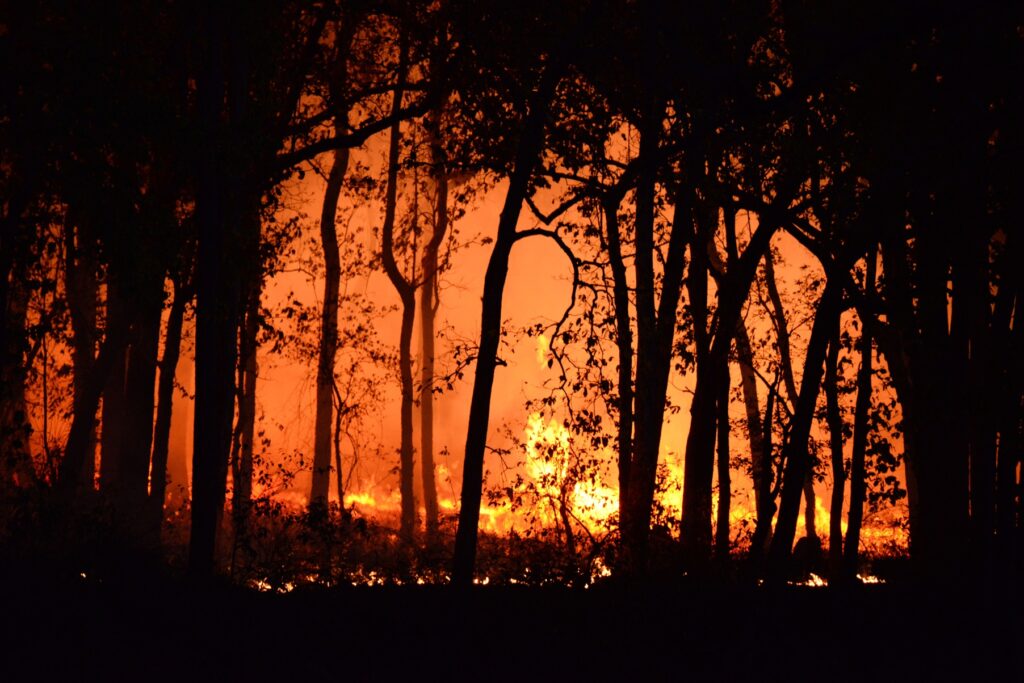
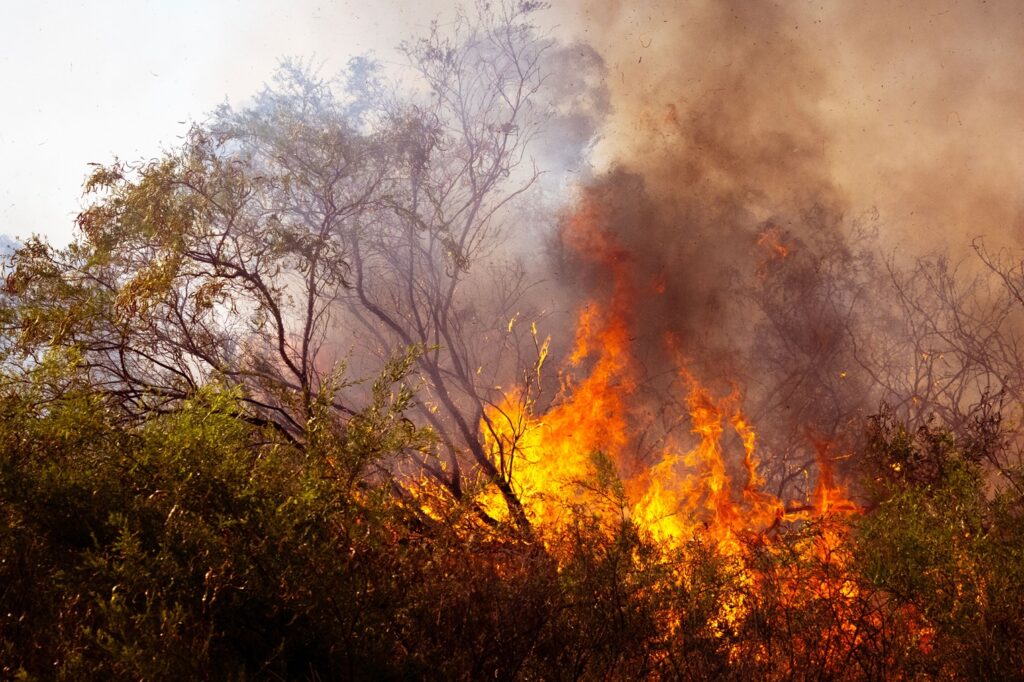
Not everyone and everything can shelter from the sizzle though, and there’s no cooling systems to cover a nature reserve or a park or a farm. The global fire season has gotten off to a blistering start, with more than 150 million hectares burned globally in the first months of 2026 – 50 percent more than the average for this time of year and 20 percent higher than the previous record. Record-breaking burn areas have been observed in almost all countries in West Africa and the Sahel region, and 85 million hectares have burned in Africa this year already compared to the previous record of 69 million hectares. Wildfire smoke is not ordinary pollution as fine particulate matter (PM2.5) from fire smoke could be 10 times more harmful to health than that from traffic emissions. Every year 1.5 million deaths are linked to air pollution, a number which is expected to increase as climate change – and El Niño Grande – leads to more frequent and intense wildfires.
Have we gone too far? Climate tipping points matter because they can accelerate climate change and produce cascading effects across ecosystems, weather systems, and human societies. Small changes in global temperatures can trigger massive, compounding, and highly disruptive climate feedback loops, even if they aren’t completely obvious. While the Global Tipping Points Report of 2025 warns that the world is nearing multiple catastrophic climate tipping points, we have not yet reached a “point of no return,” however scientists think we are already entering the danger zone. We are not falling off a cliff – just walking onto increasingly thin ice. Parts of the Greenland and West Antarctic ice sheets, Arctic permafrost, sections of the Amazon rainforest and large ocean circulation systems are approaching thresholds, and some systems such as coral reefs are in long-term decline after repeated marine heatwaves. Crossing a tipping point does not mean overnight collapse and can strain measurement as some changes unfold only gradually over decades. However, each additional fraction of a degree of warming raises the probability that some systems begin changing in ways that become difficult to reverse. But the future is not fixed. Lower emissions, ecosystem restoration, and protecting carbon sinks still reduce risk and can prevent additional tipping points from being crossed.
The United Nations Sustainable Development Goals [SDGs] are meant to ensure human well-being, economic prosperity and environmental protection – but progress remains “significantly off track” according to a new analysis, at 18 percent, with nearly half progressing too slowly, close to 20 percent even regressing and only a few years to go to the 2030 target. Hindering progress, the present United States administration is openly opposed to the SDGs and the 2030 Agenda – having withdrawn from 66 international bodies, conventions and treaties, including key climate treaties like the Paris Agreement and the Intergovernmental Panel on Climate Change. As the world’s second-largest emitter of greenhouse gasses, Uncle Sam weighs pivotally on the scale of tipping points. The star-spangled climate denials of 2015 are still smoldering. Climate change is a compelling illustration of how governments cannot be trusted to manage the future if they cannot demonstrate they are capably managing the present.
South Africa’s own record on SDGs is mixed: with some meaningful achievements, progress has been uneven and too slow to meet the 2030 targets. Food insecurity still affects many households despite national food production capacity. Water infrastructure for drinking and sanitation, drought pressure, and service delivery remain problematic. Persistently high unemployment remains one of the country’s biggest development barriers. Our country is both a major biodiversity steward and a relatively carbon-intensive economy, which means many of its SDG challenges sit at the intersection of development, inequality, water security, energy transition and ecological resilience. South Africa has developed climate policy frameworks, expanded protected areas and played an influential role in international climate negotiations, with conservation successes remaining internationally significant due to high species endemism. In the global narrative of climate change it seems unlikely that heating will remain within 1.5 degree Celsius, and the more the planet warms the narrower the window for effective adaptation becomes. Every fraction of a degree forecloses options that were open before and acting now preserves the possibility of managing what comes next. South Africa doesn’t have the luxury of tabling the linchpin of biodiversity conservation for later debate: it is an immediate priority.
In other countries crops that could have been transitioned for a changing climate are already failing. The choice before us is between a world that adapts deliberately and one that is forced to – at far greater cost: a transition that will struggle to succeed on infrastructure designed for a climate that no longer exists. Adaptation is not a failure: it is how economies stay productive, how societies stay stable, how ecological resilience is buttressed and damage is salvaged, and how larger transitions remain durable.
With climate catastrophe now on the horizon, more ambitious interventions are being considered. Today, manipulating the planetary systems that regulate life on earth is the subject of serious policy discussion. Geoengineering proposals vary widely. Marine cloud brightening would spray salt particles into low-level clouds to increase their reflectivity, while stratospheric aerosol injection would release reflective particles into the upper atmosphere to reduce the amount of sunlight reaching the earth’s surface. There are schemes to fertilise the ocean with iron to stimulate algal blooms that absorb carbon dioxide, and the Seabed Curtain Project proposes anchoring an 80-kilometer barrier on the ocean floor in front of Antarctica’s Thwaites Glacier (the “Doomsday Glacier” roughly the size of Florida that could raise global sea levels by about 65 centimeters) to block the warm waters accelerating its collapse. For most of earth’s history, only nature possessed the power to reshape planetary systems. By harnessing hundreds of millions of years of stored energy in fossil fuels and combining it with increasingly potent technologies, humanity has acquired an influence once reserved for planetary forces themselves. Geoengineering, like existing weather modification practices such as cloud seeding, takes that transformation one step further: from altering the climate unintentionally to attempting to manage it deliberately, and at perilous risk.
The earth’s climate is a complex system. Its behavior emerges from countless interactions and feedback loops, meaning that interventions in one part can trigger consequences elsewhere that cannot be fully predicted. Solar geoengineering could disrupt ocean currents and alter precipitation patterns across entire regions, with potentially profound consequences for ecosystems, water supplies and agriculture. Ocean fertilisation risks promoting toxic algal blooms that create eutrophication – oxygen-free dead zones, devastating marine food chains. Proponents of geoengineering argue that worsening climate change leaves humanity with little choice. But the fact that climate change presents grave challenges cannot mean that every technological intervention becomes justified. The danger here is not simply the gamble of unintended consequences, but rather that humanity is developing the power to manipulate planetary systems without any agreed framework for who may do so, how and to what extent – when everyone will share the consequences. At a glance, geoengineering seems like the ex machina that will abruptly resolve our climate change predicament – but the ripple effects of environmental tinkering are unpredictable and poorly understood – and the impacts are planetary. Potentially it may be helpful. Potentially it may be ecocidal. Some of the most consequential environmental processes unfold beyond human perception, across vast timescales, belonging to a planet far more complex than we can fully grasp. We should be cautious of manipulating them. It’s not enough to merely think about the problems we want to solve right now – we also need to think about the problems we don’t want to invoke downstream.

Other, less grandiose technologies such as carbon capture directly from ambient air have shown some promise. However, while being extravagantly costly as an abatement strategy compared to alternatives, it also won’t ameliorate the present circumstances of a planet that’s already aflame. Replacing fossil fuels, improving energy efficiency and lowering greenhouse gas emissions related to animal agriculture remain the most viable and sustainable methods for improving our climate change trajectory.
In a warming world, respecting fire means recognising both its ecological role and its growing power. Humans have been using fire for hundreds of thousands of years, carrying naturally-occurring fires into caves as much as 1.8 million years ago, before later learning how to create it on demand. Some ecologists describe humans as a “fire species,” and in many regions landscapes evolved with repeated human burning. Fire sits right at the boundary between nature and culture. Did humans domesticate fire, or did fire domesticate humans? Human control of fire changed our diet, altered our digestion, increased our social organisation and storytelling, extended waking hours and affected the migration of people. Some argue that indigenous burning helped maintain open “anthropogenic landscapes” and increased habitat diversity – such as savannas, grasslands and parts of the Amazon.
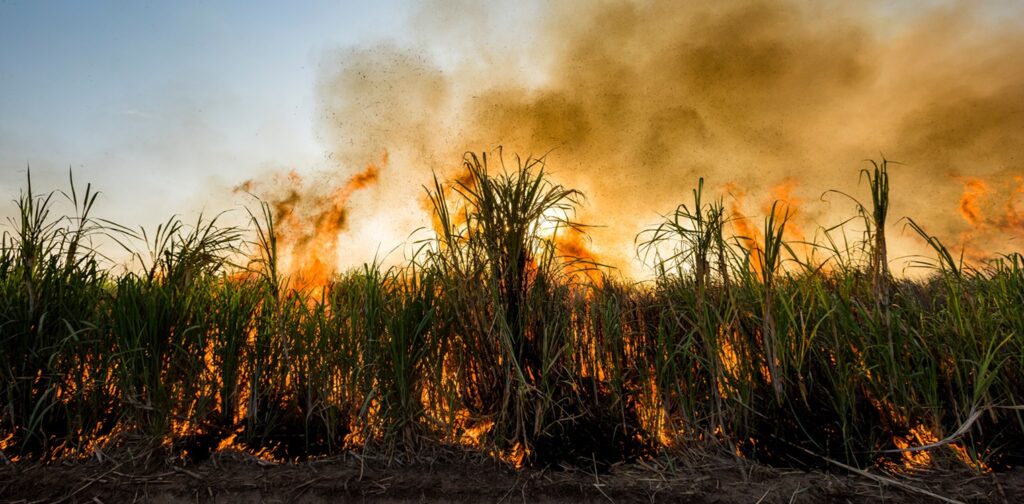
There is some debate around whether excessive fire suppression constitutes ecological disruption – increasing fuel loads and ensuring larger future fires while potentially reducing biodiversity. Mosaic burns in conjunction with seasonal timings create a shifting landscape of varied “pyrodiversity” – patches of different post-fire ages and vegetation types, preventing uncontrollable wildfires and providing diverse habitats with varied resources for species to complete their life cycles – boosting local biodiversity and environmental resilience. Many species require adjacent, contrasting habitats for breeding, foraging, and sheltering. Habitat mosaics are central to conservation planning, allowing developers to map and replace complex networks of vegetation. In South Africa this intersects with questions around stewardship, local land knowledge, and shifting conservation management from technocratic to indigenous management. A healthy ecosystem is often adapted to a particular fire regime pattern however, and not unlimited burning. A newer idea proposes that humanity has entered the Pyrocene – an age defined by human control and disruption of fire. Humans are probably the only species that has repeatedly captured, transported, controlled, and reorganised ecosystems through combustion, using it as a niche construction tool – and in doing so, reshaped both the environment and ourselves. Repeated human burning influenced vegetation structure, animal distributions, migration routes and biodiversity patterns – meaning that in many places humans and landscapes developed together.
Indigenous societies developed detailed fire knowledge regarding where to burn, when to burn, at what intensity and during what season – as both a form of governance and conservation. But early humans used fire locally, while industrial societies effectively began burning ancient ecosystems – i.e. fossil fuels – at a planetary scale. Burning carbon in the form of coal, oil and gas meant that we became a species capable of moving carbon between geological and atmospheric timescales, making us more like an “inferno species.” Historically, ecosystems adapted to recurring fire – but now warming climates, land fragmentation, invasive species, and altered rainfall can create fire regimes well outside natural ranges.
Perhaps humans should not try to stop being a fire species, but instead remember what kind of fire species we once were: a humbler and more rational one. As the climate warms, the challenge is not simply preventing fire, but learning to work with fire in ways that reduce risk and support ecological resilience. This is especially relevant in places like South Africa, where many ecosystems are fire-adapted rather than fire-free.
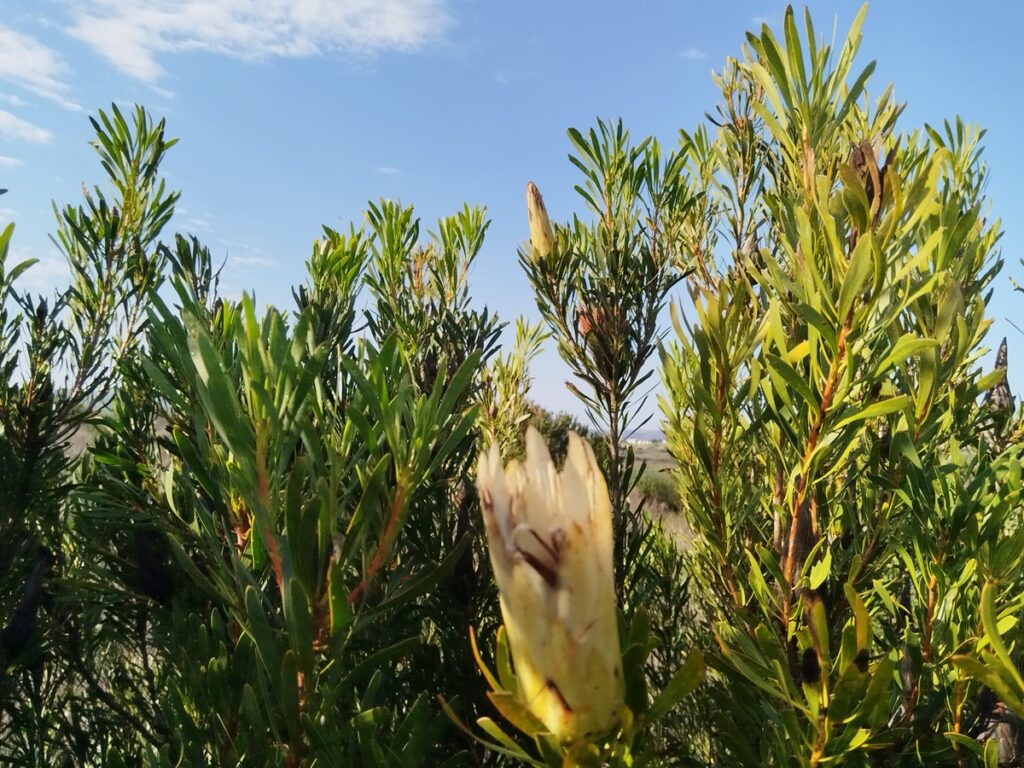
Fynbos has one of those ecological stories that seems almost paradoxical at first: fire is not simply something fynbos survives – it is something it evolved with and depends on, like an ecological reset button. Periodic fire opens space, returns nutrients to the soil, reduces accumulated plant material, and triggers a new generation of growth, while some plant species release seeds due to fire and others wait to emerge only once vegetative competition has been cleared. Many fynbos species have seeds that remain dormant until smoke, heat, or post-fire conditions signal that conditions are ideal, and chemicals in smoke itself can stimulate germination in certain species. Reseeders die in fire but leave behind seeds that germinate afterward. Resprouters survive underground and regrow from protected roots or lignotubers. A burned fynbos landscape is not dead – it’s just reorganising. Post-fire fynbos can erupt into carpets of flowers, fresh green shoots, orchids, geophytes, and bulbs that may not have appeared for years. Without fire for too long, older plants can dominate, seed banks may decline, and overall biodiversity can decrease – but too frequent fires can be just as harmful as plants may not reach maturity and replenish seeds, pushing the system towards degradation.
One of the beautiful things about fynbos is that there is no single healthy state. A blackened hillside, a field of young restios, and mature flowering protea can all be healthy: they are simply different moments in a long ecological cycle. Fire in fynbos is less like a catastrophe and more like a pulse. Ash temporarily alters nutrient availability and creates opportunities for germination and rapid growth. The Fire Lily is famous in the Cape for appearing dramatically after fire events. Other bulbs and geophytes also emerge after disturbance, creating bursts of colour. If you walk the same trail in the Southern Cape over several years after a fire you are not seeing the same landscape recover – you are watching entirely different communities take turns appearing. A field after fire is not one clock restarting – it is thousands of clocks beginning to tick at different speeds. For our indigenous species, resilience means renewing through change.

Animals are not only affected by fire; many species have evolved to depend on fire regimes and the habitats they renew – through flowering, open ground, nutrient pulses, and vegetative succession. After fire, many landscapes produce mass flowering events, creating abundance for pollinators and nectar-feeding birds such as the cape sugarbird and the orange-breasted sunbird. Small mammals recolonise recovering areas. Insects emerge rapidly into newly open habitats and some insects are effectively dependent on the existence of nearby burned landscapes. Entire insect communities are post-fire specialists – arriving rapidly after a burn for dead wood, fungi and new vegetation. Across African savannas and grasslands, fire removes old coarse vegetation and stimulates regrowth, attracting grazers such as springbok and blue wildebeest; where large herbivores frequently follow recently burned areas in a moving mosaic of grazing pressure. Cometh the grazers, cometh the predators – with their movements linked indirectly to fire cycles. In northern Australia, several raptors have been observed taking advantage of fires to flush prey, and there are indigenous accounts and some scientific observations suggesting birds such as black kites and brown falcons may even transport burning sticks to spread fires and expose prey. Animals do not merely survive this disturbance, they live with and benefit from it. Humans are not the only fire species – merely the most premeditated and globalised.
Fire and fungi are ecologically related – two different ways ecosystems transform life into possibility. Fire is rapid oxidation. Decomposition is slow combustion managed by biology. When fungi decompose organic matter they break down complex carbon compounds, release nutrients, create soil and make energy available to other organisms. Fire does many of the same things, but suddenly. Decomposition has been described as “fire slowed down enough to become habitat.” Ecosystems move variously between: fungal pathways (slow nutrient cycling) and fire pathways (fast nutrient cycling). Entire fungal communities can emerge in burned landscapes and post-fire fungi often arrive before many plants.
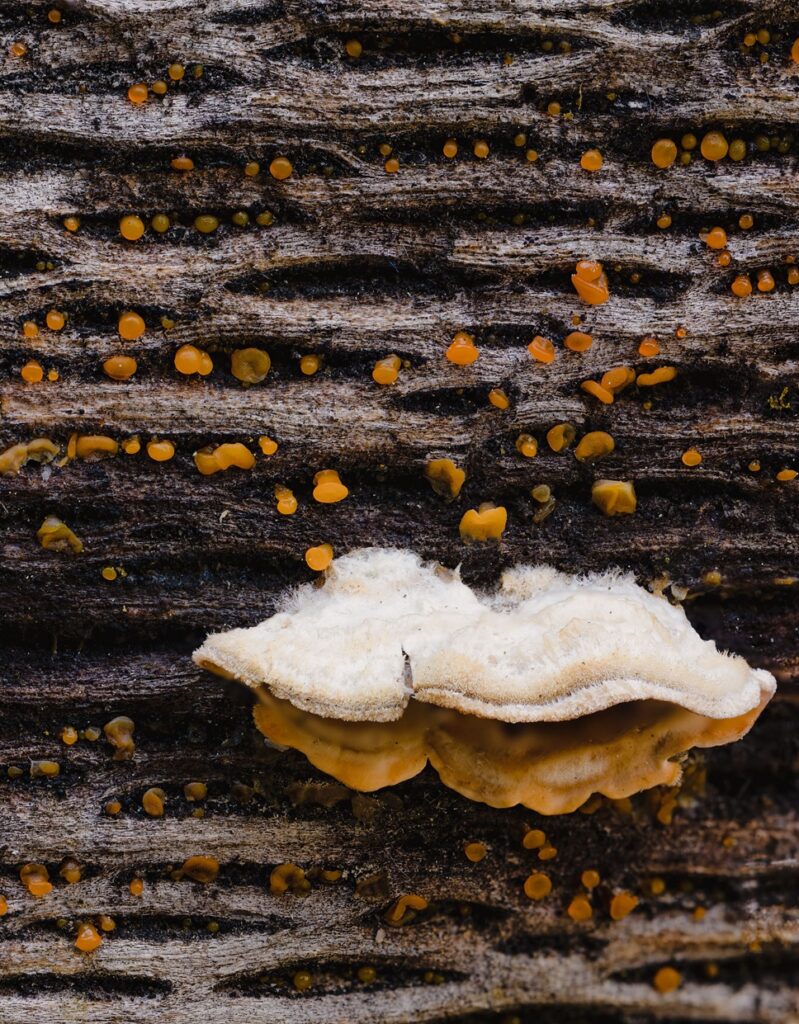
There are fungi called pyrophilous fungi (“fire-loving fungi”) like Pyronema that appear after burns, fruiting abundantly in recently burned soils, and some spores may even respond to thermal cues. Heat, up to a certain threshold, accelerates microbial metabolism. Too much is problematic. This is also why the fires of invasive woody plants such as Rooikrans (Acacia Cyclops) are deleterious to indigenous species; burning deeper into the soil and for longer periods than fynbos: which can effectively sterilise the ground of native life.
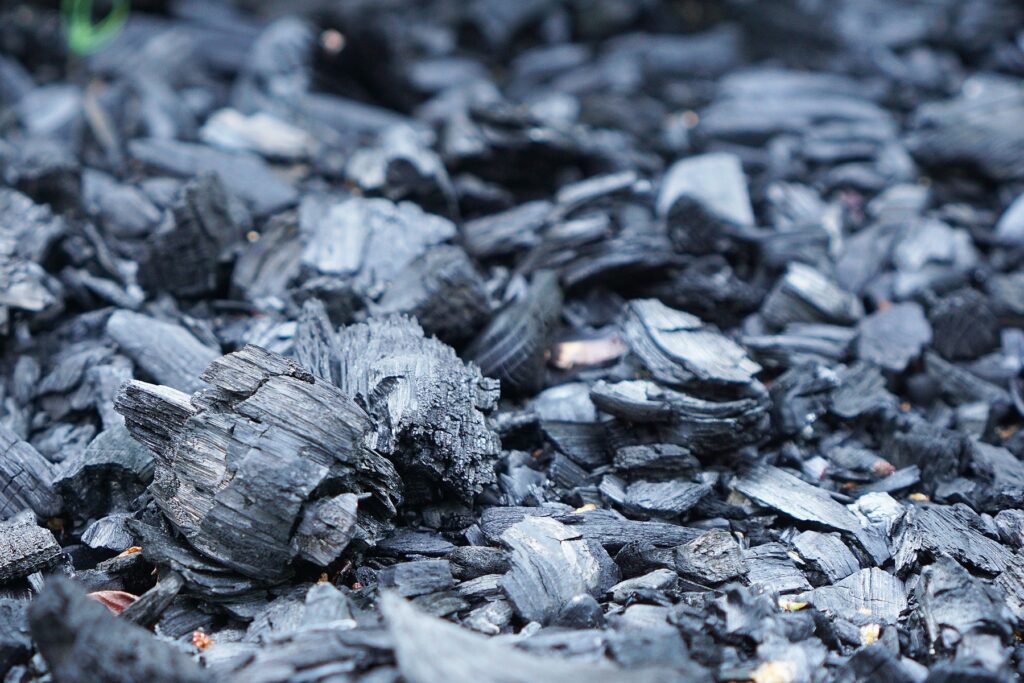
After a fire: charcoal remains, but this is not ecologically dead as it hosts microbes, influences soil chemistry and creates microhabitats and fungal colonies. Ash and fungi are collaborators. Biochar – a specialised porous form of charcoal that releases essential plant nutrients and provides a habitat for beneficial soil microbes – becomes especially interesting in this conversation because it sits almost exactly at the meeting point between fire, decomposition, carbon, and renewal. If fire and fungi are two ways ecosystems transform life, biochar – made through a process called pyrolysis – is one of the things fire leaves behind that changes what happens next. Fire creates carbon structures. Fungi inhabit them. Plants connect into them. Functioning as a platform for ecological relationships, biochar creates carbon that decomposes very slowly, and fire can therefore both release carbon and actually stabilise some of it.
Fire and heat are not merely destructive forces – they have often acted as evolutionary and natural architects. Not everywhere, and not all the time, but in many systems across earth they help create diversity, maintain habitats, recycle nutrients, and prevent ecological stagnation. That said, there is a difference between natural thermal variation and rapid anthropogenic warming. The first helped shape biodiversity; the second is increasingly pushing species beyond adaptation limits. Climate change is changing the rules: ecosystems evolved with predictable periodic fire patterns: not necessarily with hotter average temperatures, longer fire seasons, invasive species and more extreme weather overall.
Fire can be destructive. Heat can become harmful. But in many ecosystems, disturbance has also been one of the great makers of life. Fire does not end the story: it turns the page. Fire does not only consume – it reveals. In fynbos, fire is an old rhythm – one written into the roots, the seeds, and the memory of the land. The fynbos teaches a different kind of resilience: not resisting change, but renewing through it. This challenges the human instinct to see all fire as loss. Everything flows, and nothing remains. Some landscapes are born from flame. Respecting fire means knowing when it renews and when it overwhelms. Fire is an ancient teacher: ignore it and it consumes, understand it and it transforms.
In Greek myth, Prometheus steals fire from the gods and gives it to humanity. Fire in the myth is never merely literal flame: it represents knowledge, technology, transformation, and the ability to reshape the world. Before fire, humans largely belonged to ecosystems. After fire, humans increasingly began to alter ecosystems. Fire made people more embedded in ecological cycles and participants in disturbance ecology. The question now is not can humans use fire? But can humans remember they are not gods, and participate in nature more responsibly? Learning about ecology often feels less like gaining control and more like discovering how little control there ever was. We thought fire made us masters of nature, but then we discovered entire ecosystems had known how to use fire long before us – helping us recognise how primordial and intelligent natural systems already are.
After the atomic firestorms that concluded the Second World War, the most remarkable fires were arguably in the shape of the flaming thrust billowing from Saturn V rockets, taking us to the moon. During the Apollo programme, astronauts looked back over their shoulders in awe, with human eyes seeing the earth for the first time: inspiring a transcendent cognitive shift towards a feeling of connection to the planet as a whole. We now call this the overview effect. Captivating global audiences, the seeds of the modern environmental movement were planted. Even in the midst of the Cold War, people paused with rejuvenated clarity to reflect on their relationship to the earth. Don’t let it be said that a time of human conflict is no time to be thinking about nature. And so, between 1968 and 1973 environmental actions sprung up with unprecedented rapidity. The first moon landing happened in 1969. The Comprehensive Clean Air Act [US] followed in 1970. The first National Earth Day came in 1970. The formation of the National Oceanic and Atmospheric Administration [NOAA] was in 1970. The Council on Environmental Quality [US] was created in 1970. The Natural Resources Defense Council [US] was founded in 1970. The Whole Earth Catalog ran mainly from 1968-1972. Between 1967 and 1970 the first official federal list of protected species was compiled under the Endangered Species Preservation Act [US] which protected 78 species. The forming of the Environmental Protection Agency [US] took place in 1972. Greenpeace was founded in 1971 in Canada. The World Economic Forum, shaping global development policy, was founded in 1971. The Clean Water Act [US] came in 1972. The banning of the ruinous insecticide DDT came in 1972. The Endangered Species Act [US] passed in 1973. The first catalytic converters for cars – converting toxic pollutants from exhaust gasses into less harmful emissions – arrived in 1973, and the first unleaded fuel emission standards [US] in the same year. Apollo’s images of earth from space became the unofficial, yet enduring, flag for Earth Day and its movement. Mass environmental awareness (by then on colour television – becoming a household norm in 1970) happened in the middle of the missions to the moon (finishing in 1972), infusing civilisation with an upgraded collective capacity to care. Never underestimate how new cosmic perspectives and voyages beyond our own political borders and atmosphere can shape what happens on this planet. If it weren’t so costly or carbon-intensive, perhaps every world leader should begin their tenure with a gestalt-shifting trip to space.

As we reflect on South African Environment Month this past June, much can be said about the lukewarm inadequacy with which it was celebrated and the lack of seriousness around current governmental priorities and policy shifts. Reasonably troubling is the government’s plans to introduce a more flexible environmental impact assessment process: proposed changes that could weaken public participation, undermine proper assessment and increase the incentives for corruption – raising the risks and damage from human development on natural ecosystems. The possibility of greasing palms with silver for expedited discretionary approval is likely not in the best interests of nature conservation.
A 2026 horizon scan for biodiversity conservation in South Africa highlights three critical needs: adaptive governance systems, cross-sectoral collaboration capacity and vigilance around new technologies that may simultaneously offer solutions and create new environmental pressures. The energy transition, transmission infrastructures, artificial intelligence, loss of natural vegetation, poor regulation on pesticides, pressures on agriculture, regulatory barriers and biodiversity monitoring gaps are among the major issues of the coming period.

In our previous features for National Environment Month we’ve examined the earth, its water and air systems in their relation to ecosystems, indigenous flora & fauna and conservation challenges. No element stands alone: the challenge is now for the public, regulators, environmental watchdogs and activists to take meaningful action – abandoning the silos of niche interests and pet topics to collaborate as part of an integrated bigger picture. Nature already does it – and so should we.
Says Gill Simpson, executive director of the Wild Rescue nature reserve, “The fynbos floral kingdom has a lot of lessons for us as individual people, communities, and for those in conservation and in governments. The myriad interactions of these over 9,000 plant species and their interdependencies with the soil, water, air, and the renewing energy of fire can both reveal how our world and its climate is changing and teach us about effective adaptation and resilience. Nature discards what doesn’t work and selects for successful mechanisms, without bias. This Environment Month and beyond perhaps we need a new kind of overview effect to lift us from our current myopic habits; to once again see the world as an integrated whole, where climate change is a global issue and not a regional concern, or someone else’s problem. Maybe the shared challenges of a warming world will align perspectives and quiet futile arguments, and help us refocus on the natural biodiversity that underpins our own existence.”
Read our coverage on Conservation Mag.