


From the pages of Homer’s ancient Greek epic to the landscapes of the Western Cape, the story of Acacia cyclops – commonly known as the Red-eyed wattle, Rooikrans or Rooipitjie (in Afrikaans vernacular) – has an unexpected connection to one of the most famous stories ever told and the highly successful 2026 blockbuster film.
The name Acacia cyclops comes from the tree’s distinctive seeds. Glossy and dark, they are surrounded by a vivid crimson-red fleshy covering that resembles a bloodshot eye – an appearance that inspired the species’ association with the mythical Cyclops in book 9 of The Odyssey.
In Homer’s The Odyssey, Odysseus and his crew encounter Polyphemus, a one-eyed giant and son of the sea god Poseidon. Trapped inside Polyphemus’s cave, the crew must use their ingenuity to escape. Odysseus eventually blinds the giant and leads his men to freedom by hiding them beneath the bellies of the Cyclops’s sheep.
The Odyssey was written around 700 BCE; though it was likely passed down by bards and traveling poets for centuries, along with other tales from the Trojan War, before being recorded on papyrus scrolls. Thereby the Cyclops has become one of the most recognisable creatures in Western mythology and popular culture. But while the mythical Cyclops was defeated by cleverness and courage, its botanical namesake today presents a far more enduring and crucial challenge.
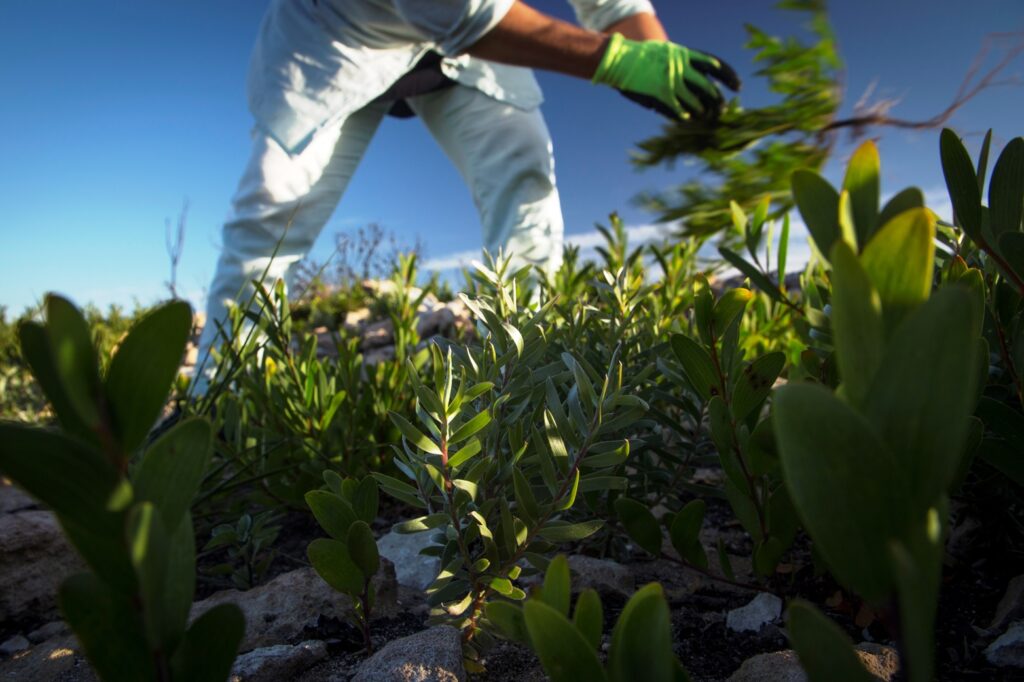
Currently, Acacia cyclops is one of many invasive alien plants threatening the biodiversity of the Western Cape and the Fynbos Floral Kingdom. Alongside Rooikrans, species such as Black Wattle (Acacia mearnsii), Port Jackson (Acacia saligna) and Poplars (Populus species) have aggressively established themselves in the region – overwhelming the landscape. Rooikrans was introduced around the 1850s to the Cape Colony by the British Empire to stabilise shifting coastal sand dunes and prevent wind erosion along the Cape Flats, easing transportation by wagon. In the ideal soil and climate conditions of the Western and Southern Cape, these plants form dense stands that outcompete indigenous vegetation and adversely affect natural ecosystems.
The consequences are particularly serious in the Cape Floristic Region, a global biodiversity hotspot renowned for its remarkable plant diversity and high levels of endemism. The fynbos is not simply a collection of beautiful plants. It is a complex, interconnected ecosystem shaped by unique alkaline soils, climate, fire regimes and unique relationships between plants, insects, birds, mammals and other species.
When invasive alien plants take over, they can push out indigenous species that have nowhere else in the world to grow. They can reduce food and shelter for native wildlife, alter soil conditions and nutrient cycles, and disrupt biotic interactions that have developed over thousands to millions of years. They can also harmfully change the fire regimes on which our fynbos plant species rely on for renewal.

Fynbos is a fire-adapted ecosystem, and many indigenous species depend on fire occurring at the right intervals to regenerate. Dense stands of invasive alien trees can increase the amount of combustible material in the landscape, potentially leading to hotter or more intense fires. Burning far longer than the indigenous fynbos, these Rooikrans fires can effectively sterilise the soil of native species, stifling their regrowth. If fires occur too frequently, some indigenous species may not have enough time to mature and produce seeds before the next fire arrives.
Cutting down these trees is often only the beginning. Some species can regenerate from roots or stumps by coppicing rapidly, while others produce large quantities of seeds that remain viable in the soil for decades. Cleared areas must be continuously monitored and revisited to remove new seedlings and prevent the trees from returning. In difficult terrain, such as high slopes or deep valleys; the work can be physically demanding and costly, requiring specialised training and sustained effort over years.
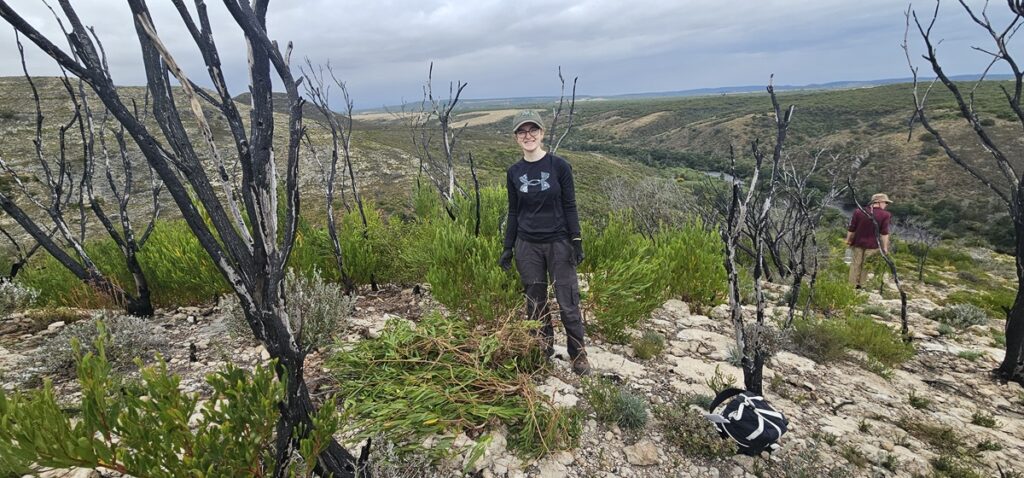
The good news is that nature can be remarkably resilient when given the opportunity. Indigenous species can be rewilded. Removing invasive alien plants can open space for the native vegetation to return, allowing all our local species to reclaim their rightful place in the ecosystem.
The story of the Cyclops reminds us that sometimes the greatest challenges are the ones that require ingenuity, persistence and teamwork to overcome. Our invasive alien plant problem will not be solved overnight, but every tree removed and every hectare restored is a step towards protecting the extraordinary biodiversity of the Western Cape.
Unlike the mythical Cyclops, Rooikrans cannot be defeated by a single heroic act. It requires something much more powerful: collective action, long-term commitment, financial investment, appreciation for indigenous biodiversity and a willingness to care for the natural world we all depend upon.