Wild Rescue nature reserve launches ‘Wild Classroom’ education programme to reconnect Hessequa schoolchildren with nature
STILL BAY, WESTERN CAPE – What if some of the most important lessons children could learn happen in the outdoors?
That is the question behind Wild Classroom, a new environmental education programme launched by Wild Rescue nature reserve near Still Bay, which aims to bring school learners from surrounding communities onto the reserve to explore, experience and learn about the natural world first-hand.
The programme connects young people with the extraordinary indigenous biodiversity of the Hessequa region through immersive outdoor learning, guided by subject-matter experts from the area who volunteer their time and knowledge to inspire the next generation of young naturalists.
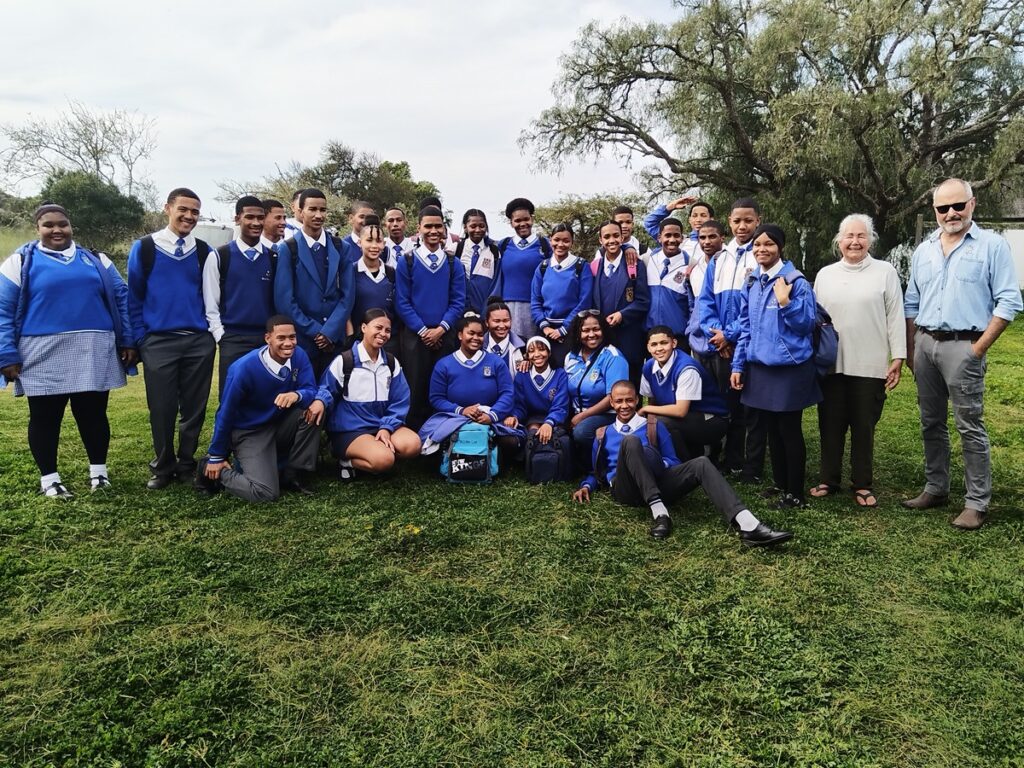
Thirty high school learners from Riversdale recently traded desks and textbooks for fynbos-covered hills, a river valley and a sweeping view of the Goukou River – and discovered that some of their most captivating Life Sciences observations were waiting for them in the field.
The learners from Gerrit Du Plessis Secondary School were the first participants in Wild Classroom. The programme has a simple ambition: to get children out into nature and give them the opportunity to learn about indigenous biodiversity from the people who know it best.
Rather than bringing environmental education to children through another screen or an app, Wild Rescue is bringing the children to the landscape itself.
“Children can learn about an ecosystem from a textbook, but there is something fundamentally different about standing with your own two feet in that ecosystem,” says Wild Rescue founder and director Gill Simpson. “When you can see it, smell it, touch it and walk through it, the subject becomes real and absorbing.”
That connection is increasingly important in a world where children are spending more time indoors and less time experiencing the natural environments around them.
Research into children and nature has associated time spent outdoors with a range of potential benefits, including improved wellbeing, physical activity, attention, creativity and social development. Nature-based learning can also increase engagement with academic learning and help children develop a stronger connection with the natural world.
For conservationists, that connection has another important consequence: children who understand, value and respect nature are more likely to want to protect it. Wild Classroom is designed around that principle.
A classroom without walls
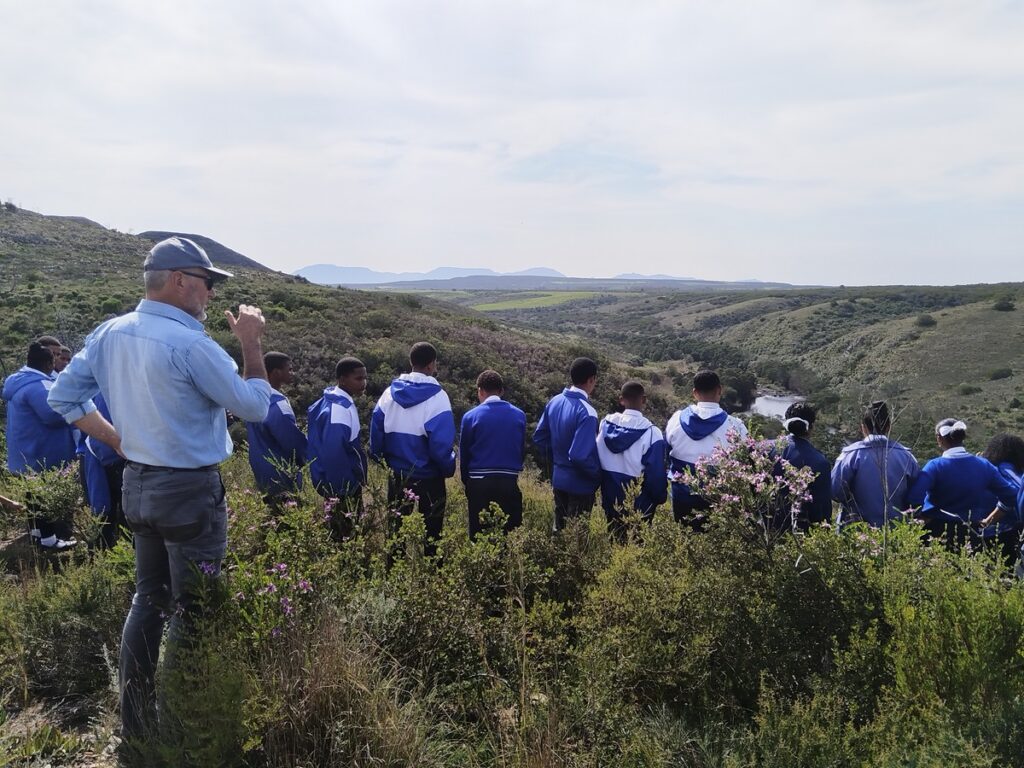
The programme’s inaugural excursion took place on Thursday, 27 August, when 30 Senior Phase Life Sciences learners and their teachers travelled from the town of Riversdale to Wild Rescue in the Klipfontein farming and conservation area.
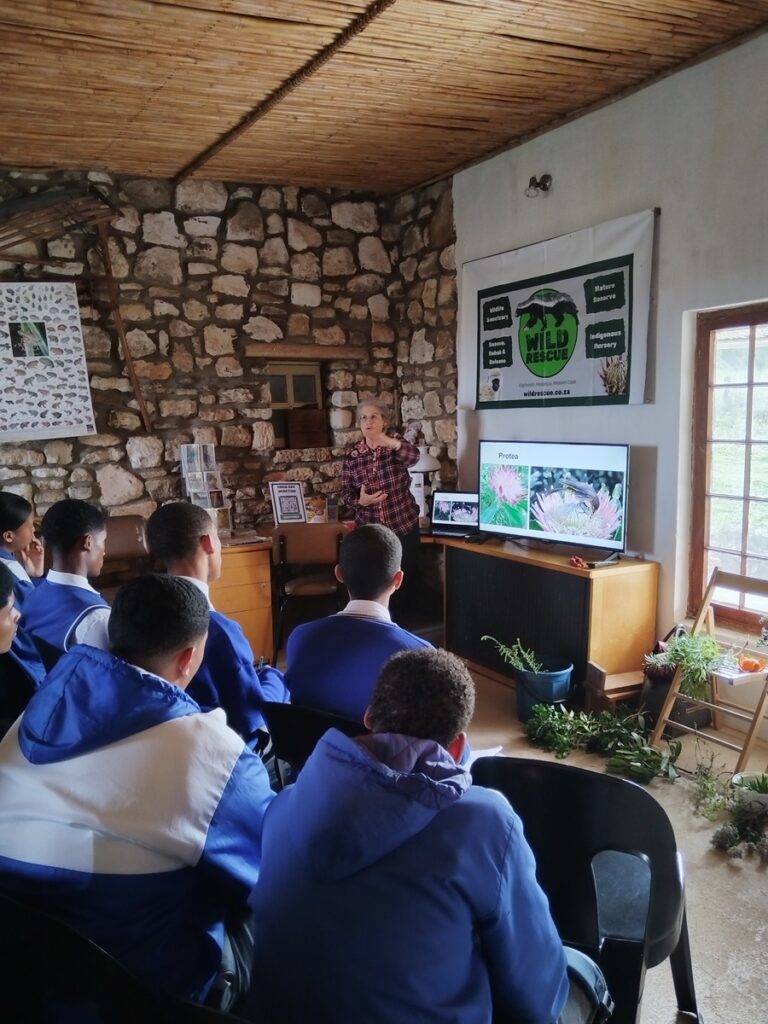
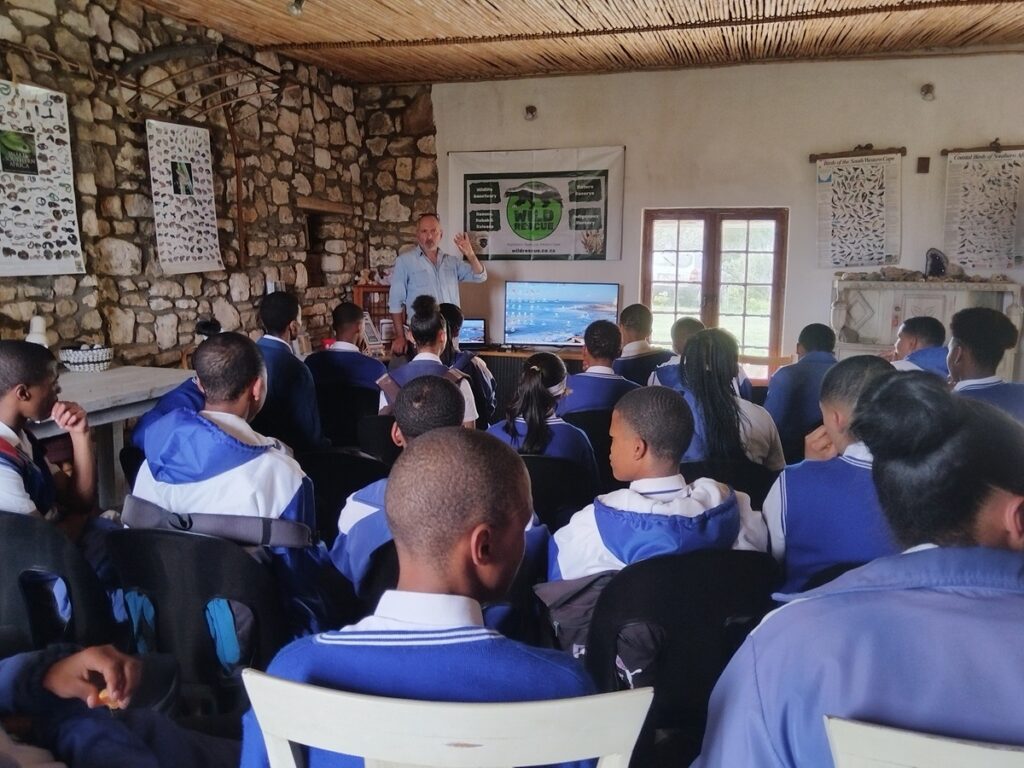
The day began in the reserve’s Education Centre, where Gill Simpson welcomed the learners and introduced them to the organisation and the day’s hosts.
Andor Venter – a prominent botanist, researcher and educator from Tuin op die Brak and the herbarium in Still Bay – gave the learners a special 30-minute introduction to the Cape Floristic Region, exploring the extraordinary diversity of indigenous plants found in the region and the importance of conserving them.
Andor was joined by her husband Johan Venter and Wild Rescue board member Martjie Fourie in the talk before the learners set off into the reserve with Dr. Wilhelm de Beer of the Gouritz Cluster Biosphere Reserve.
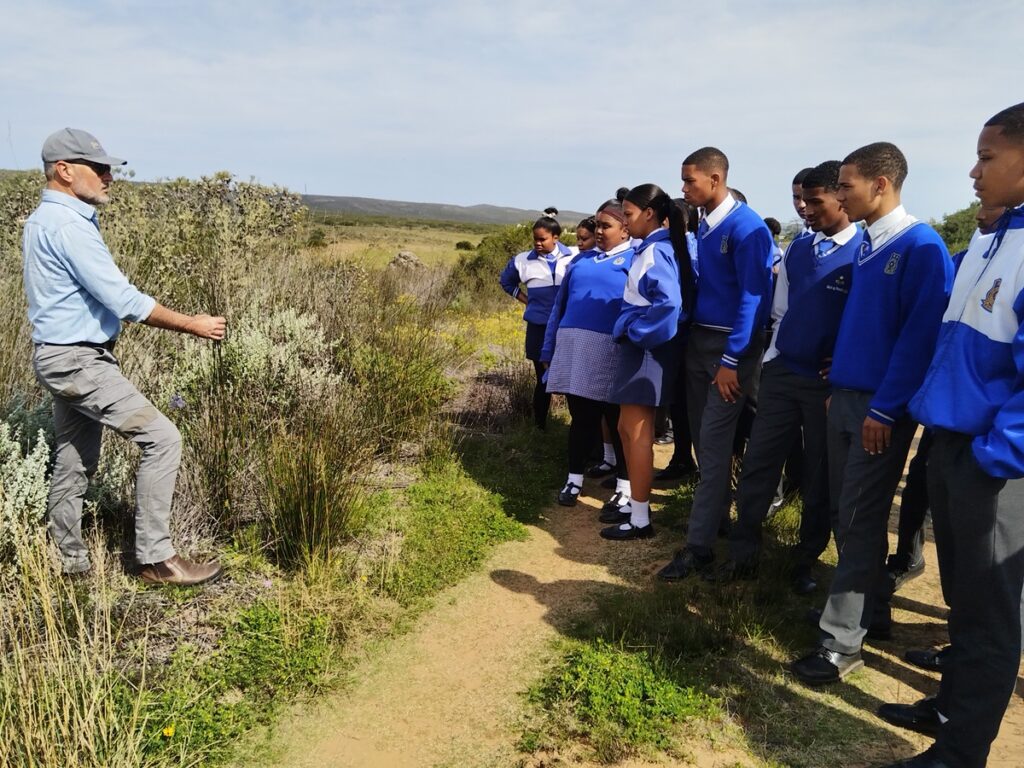
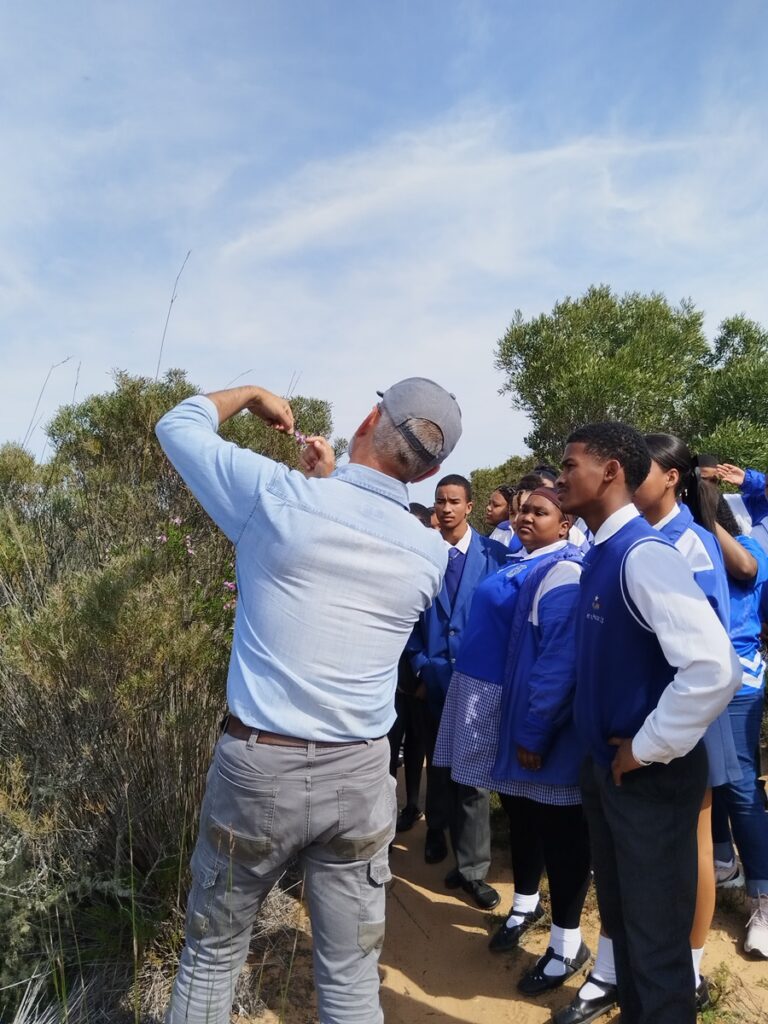
Walking through the nature reserve, Dr. de Beer introduced the learners to native species, the veld and detailed some of the natural relationships that allow ecosystems to function.
The group made its way to Wild Rescue’s Protea Trail in its limestone fynbos section, before following the Aloe Trail to the reserve’s old Shepherd’s Cottage. From there the learners could look out across the Goukou River towards the distinctive Sleeping Beauty mountains.
But the view also became an opportunity to discuss one of the most pressing challenges facing local ecosystems: invasive alien vegetation. Dr. de Beer showed the learners indigenous species associated with the river environment and explained the impacts of invasive species such as rooikrans, black wattle and river hyacinth.
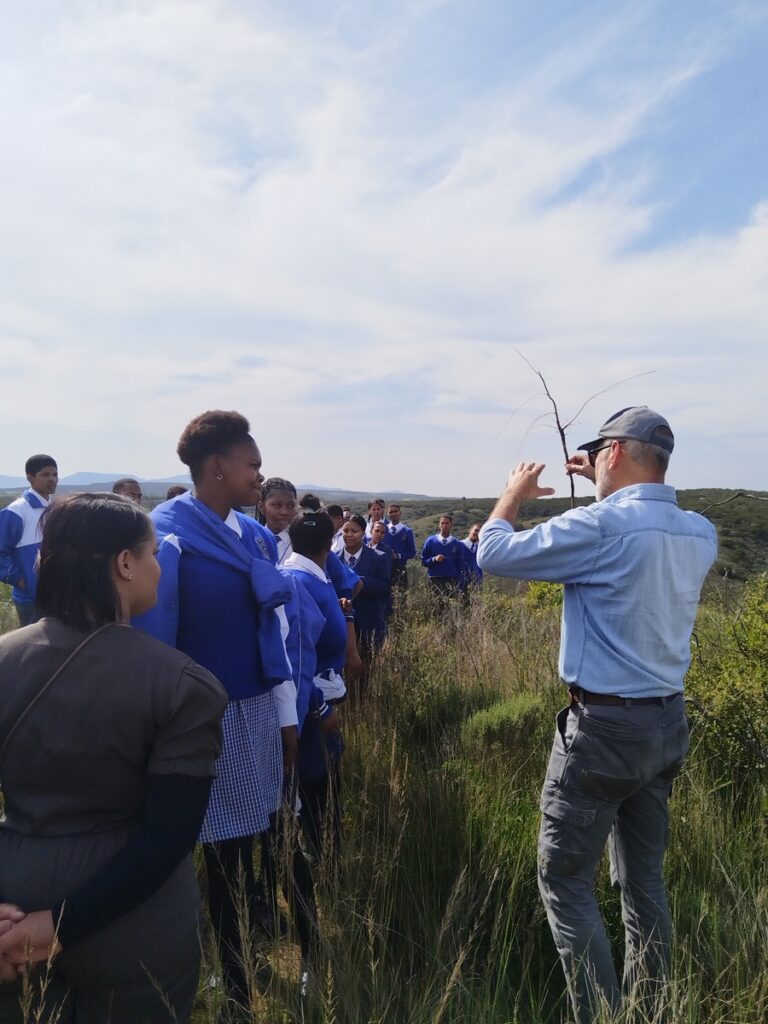
The students learned that invasive plants do more than compete with indigenous species; they can change the structure and functioning of ecosystems, alter water systems, turn natural fire regimes into a harmful cycle, and exacerbate the effects of extreme weather events – including flooding. Suddenly these concepts were no longer abstract terms in a textbook, but visible in the landscape around them.
The group eventually returned to the Education Centre for a final discussion about the local ecosystems before the learners boarded their bus back to Riversdale. According to the school, the excursion gave the learners knowledge about the biosphere and indigenous and alien vegetation in the Hessequa area, while also making them aware of the role they can play in conserving their environment.
Growing young naturalists
Wild Rescue believes that this kind of first-hand experience can play an important role in creating the next generation of environmental stewards.
Environmental education is not simply about teaching children the names of plants and animals. It is about helping them understand the relationships between living things, the pressures ecosystems face and their own place within those systems.
And spending time in nature can provide something that conventional classroom learning cannot easily replicate: direct experience.
Studies of outdoor and nature-based education have found links with children’s wellbeing, engagement and learning, while research into nature connectedness suggests that positive experiences in nature can contribute to more pro-environmental attitudes and behaviours.
For Wild Rescue, this makes environmental education a natural extension of its conservation work.
“We want children to leave here with questions,” says Gill Simpson. “We want them to look differently at the veld when they drive home. We want them to notice the plants growing beside the road, recognise an invasive species, wonder where the river comes from, or ask why a particular landscape looks the way it does.”
The first Wild Classroom group was made possible through collaboration between Wild Rescue, the Gouritz Cluster Biosphere Reserve, Gerrit Du Plessis Secondary School and the Hessequa Municipality Library in Riversdale.
Wild Rescue would particularly like to thank Melanie Cloete of the Hessequa Municipality for helping coordinate the visit, as well as the volunteer experts who gave their time to share their knowledge with the learners.
The reserve is now inviting schools, youth organisations and children’s groups throughout the surrounding region to participate in Wild Classroom.
In an era when children are increasingly disconnected from the natural world, Wild Rescue hopes to make that world more appealing and influential to the youth.
The next generation of conservationists simply need the chance to experience the wonder of nature tangibly.
The wild is the classroom.